

Sarbanes-Oxley for Controllers
Chief Financial Officers and Controllers should be familiar with the Sarbanes-Oxley Act of 2002. After some highly-publicized financial scandals, Congress passed new regulations that imposed stricter record-keeping requirements and other regulatory policies on...

Legal Compliance Requirements for Corporate Finance
Keeping up with current legal requirements is a full-time job in and of itself. Financial controllers may struggle to fully understand the legal requirements that apply to their company. While forensic accounting practices can uncover areas in which a company fails to...

The New Certified B Corporation Explained
If previous decades were defined by financial scandals, today’s business landscape is increasingly defined by conscience. Younger investors in particular are concerned about the ways that a company treats its employees, as well as the impact that companies have on the...

5 Signs You Have Outgrown Your Accounting System
As the size, complexity, and pace of your business grow, the frustrations can multiply. That accounting system you relied on to manage finances and operations has, over time, gradually become a barrier to growth and efficiency. But in a highly competitive business...

5 Questions CFOs Should Ask Their Controller
As the office of the controller becomes ever more strategic—creating higher levels of financial visibility to help drive growth and profitability—the financial organization’s relationship to the controller role must evolve as well. Specifically: Today’s CFO needs to...

Becoming the Controller of Tomorrow Means Transforming Today
The pandemic was the ultimate disruptor for businesses, but it’s also providing the opportunity to accelerate transformation and position companies to adapt more quickly to competitive pressures, customer demands, regulatory changes, emerging technology and more....

6 Considerations for Returning to Work
We recently had experts join us for an informative discussion on how company culture will shape re-opening of offices, how office space will be re-defined, as well as the future of work and the role the office will play. The webinar was titled Return to Office:...

What Controllers Need to Know About Forensic Accounting
The word “forensic” immediately evokes the imagery of mystery novels and police procedural dramas. But forensic accounting is an important, specialized set of techniques with a variety of applications in the financial world. Many business schools even offer...
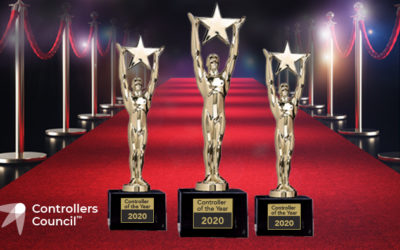
Winners Announced for 2020 Controller of the Year Awards
The first annual Controller of the Year Awards™ program recognized effectiveness and results of Controllers and related roles/titles (CFOs, Chief Accounting Officers, VP Accounting, etc.) by an online nomination...

Buying an AP Automation Solution
We recently had experts from Quicken and Bill.com join us for an informative discussion on the benefits of an AP automation solution, and what features finance teams should consider when selecting one. The webinar was titled Buying an AP Automation...

The Current Expected Credit Losses (CECL) Model
The economic crisis of 2007-2008 was caused by negligence in financial institutions. In response to the crisis, the federal government with boards of professional accountants created standards for reporting financial activities. One of the widely used standards was...

How Finance Executives Can Plan for Growth During Market Volatility
We recently had experts from insightsoftware join us for an informative discussion on how to start exercising control over your planning to drive business growth. The webinar was titled Best Way to Plan for Growth During Market Volatility and featured Josh Schauer,...


Get the latest news and important resources sent directly to your inbox: