
As artificial intelligence adoption accelerates, CFOs and Controllers are increasingly asked to validate business cases, approve investment, and demonstrate return on AI initiatives. The AI Leaders Council’s 2026 Corporate AI Outlook Study provides timely insight into how organizations are measuring AI impact and where challenges remain.
Rather than focusing on theoretical potential, the study highlights how leaders are approaching AI value in practical, operational terms.
AI impact is often incremental, not transformational
Survey results show that most organizations report moderate or localized business impact from AI rather than enterprise-wide transformation. This does not indicate underperformance. Instead, it reflects how AI value typically emerges through incremental improvements embedded in daily operations.
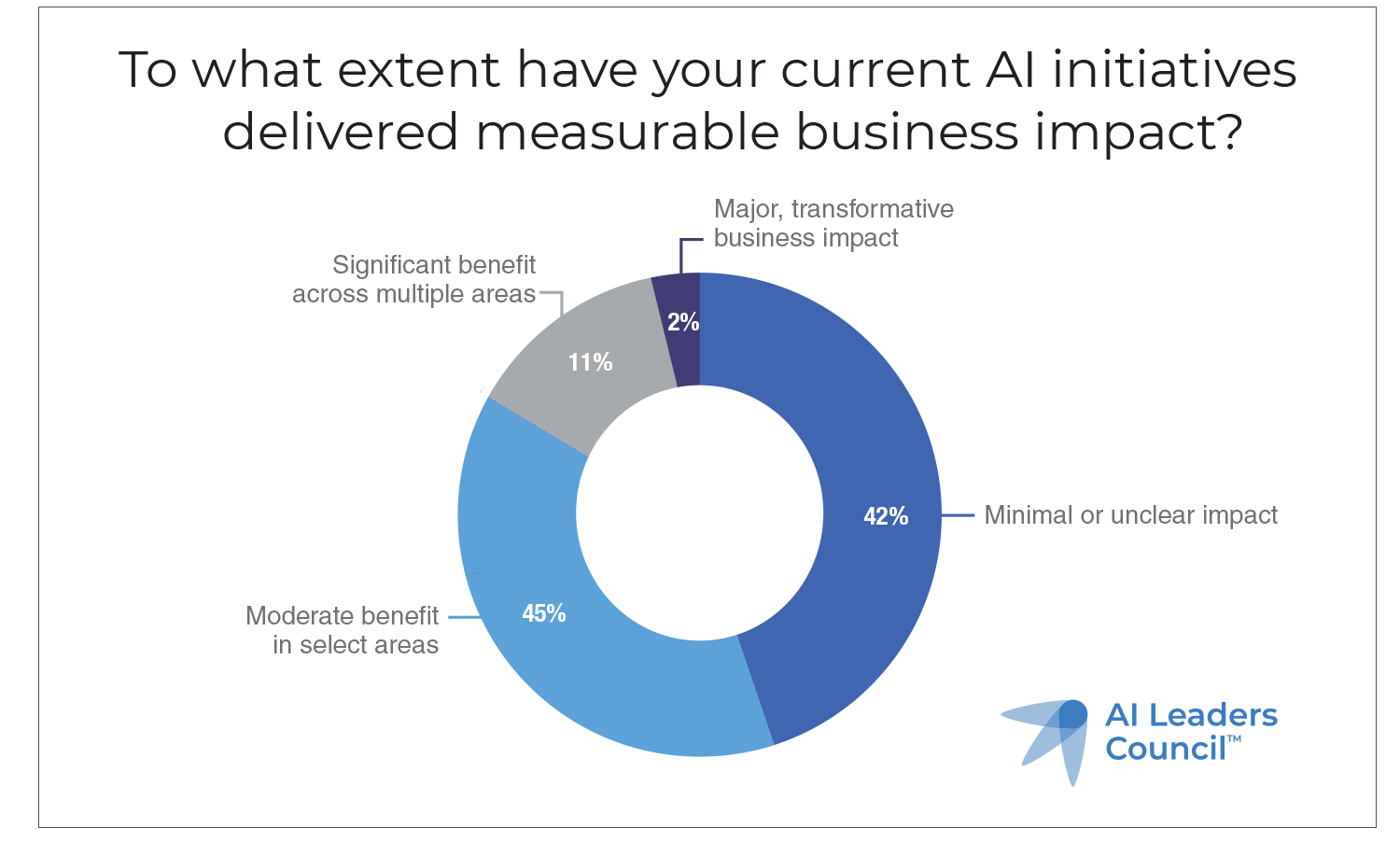
For finance leaders, this means ROI measurement often requires a more granular approach. Productivity improvements, reduced manual processing, and faster cycle times may not appear as standalone revenue drivers, but they directly affect cost structure and capacity.
Measuring AI ROI requires updated frameworks
Traditional capital investment models are not always well suited for evaluating AI initiatives. Many AI use cases involve process optimization rather than discrete asset deployment.
CFOs and Controllers can improve evaluation by focusing on operational metrics tied to financial outcomes. These include labor efficiency, error reduction, throughput improvements, and improved forecast accuracy. Aligning AI initiatives with existing performance management frameworks helps make value more visible.
Discipline protects long-term value
The study also highlights ROI uncertainty one of the top concerns for organizations planning AI expansion in 2026. This reinforces the importance of governance, stage-gated investment, and clear success criteria.
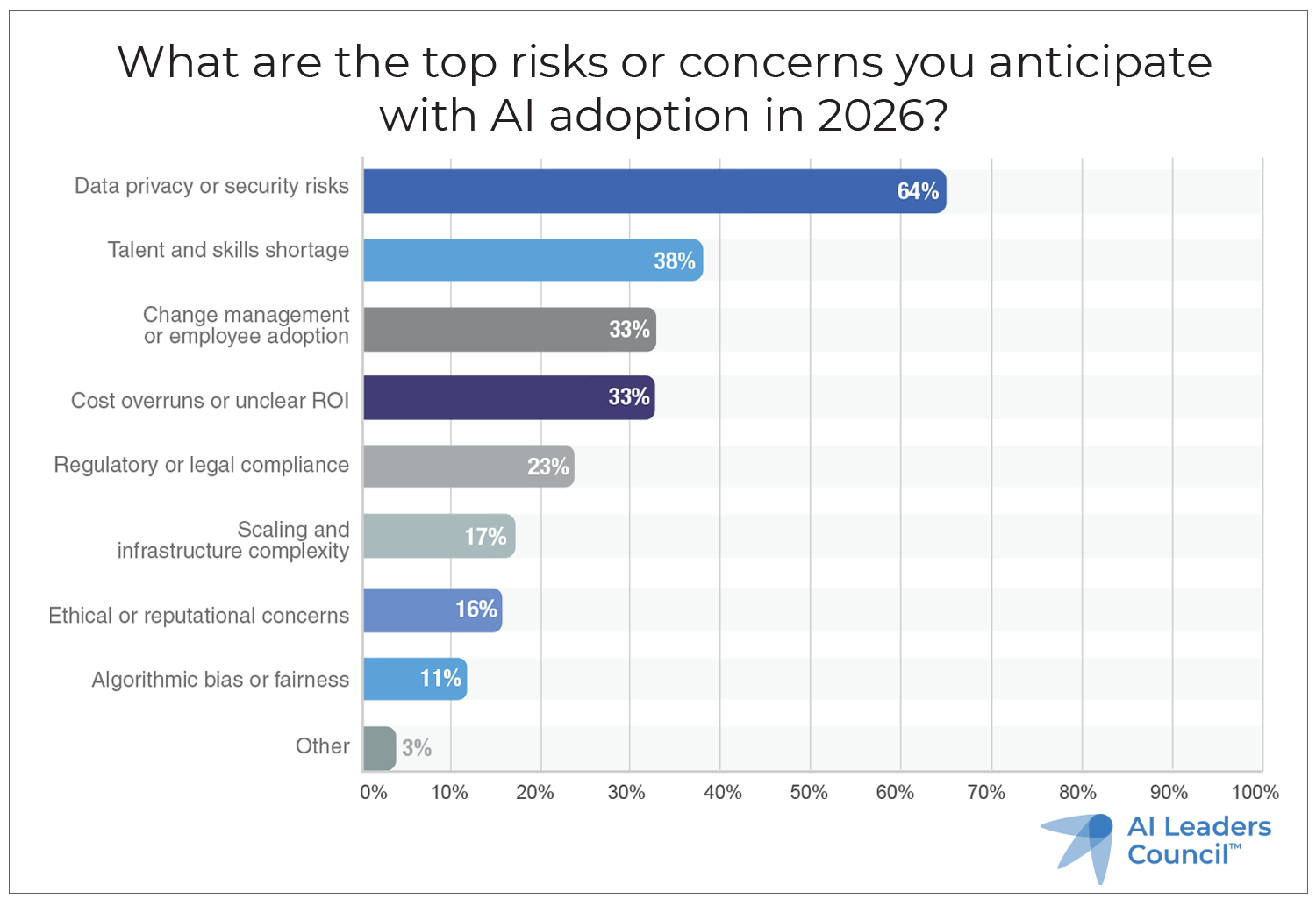
Finance leaders who require structured business cases, phased funding, and ongoing performance review help ensure AI initiatives remain aligned with organizational priorities rather than drifting into unfocused experimentation.
Building financial confidence in AI initiatives
As AI becomes more embedded in core operations, CFOs will increasingly shape how initiatives are prioritized, funded, and evaluated. Strong financial oversight does not slow innovation. It enables sustainable scale.
The 2026 Corporate AI Outlook Study from the AI Leaders Council connects AI adoption trends with investment priorities and performance expectations. Download the full report to see how organizations are measuring AI value and managing ROI heading into 2026.